Water velocity through piping is the average speed at which water flows through the cross-sectional area of a pipe. It is commonly used in hydraulic and piping calculations to determine how quickly water moves through a pipe for a given flow rate and pipe diameter.
Water Velocity Through Piping formula |
||
| \( v_w \;=\; \dfrac{ 0.134 \cdot Q_w }{ 3 600 \cdot \pi \cdot \left( \dfrac{ d }{ 24 } \right)^2 } \) (Water Velocity Through Piping) | ||
| Symbol | English | Metric |
| \( v_w \) = Water Velocity | \(gal\;/\;hr\) | - |
| \( Q_w \) = Water Flow Rate | \(ft^3\;/\;sec\) | - |
| \( \pi \) = Pi | \(3.141 592 653 ...\) | - |
| \( d \) = Pipe Inside Diameter | \(in\) | - |
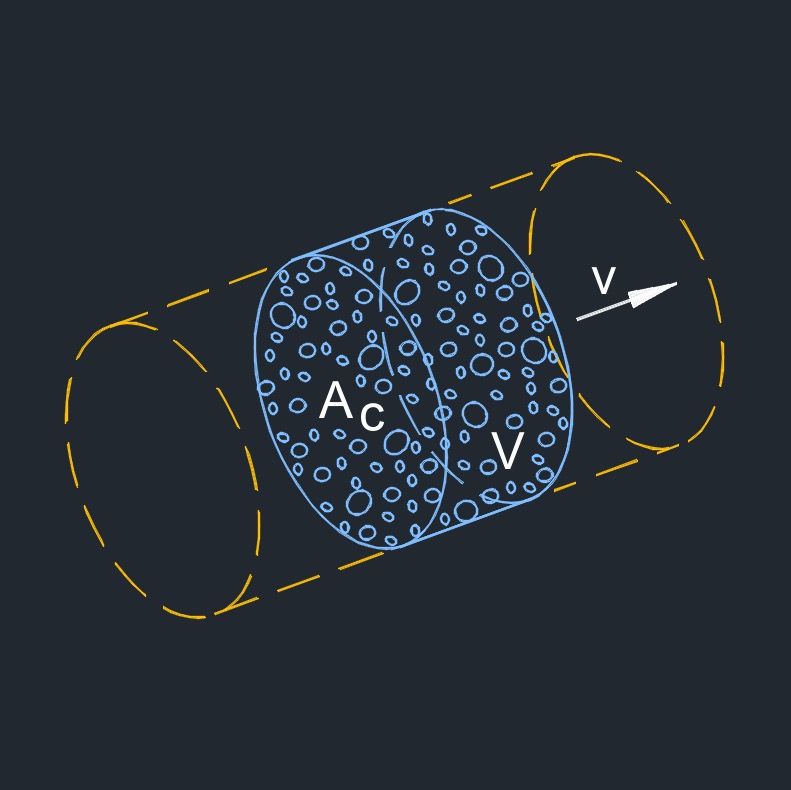 Water velocity is important because increasing velocity generally increases frictional head loss and pressure drop through piping. Excessively high velocity can also contribute to noise, vibration, erosion, and water hammer effects, while excessively low velocity can result in poor system performance or inadequate transport of suspended material in some applications. The appropriate design velocity depends on the piping material, service, temperature, pressure, application, and applicable engineering code or standard.