
Pressure Vessel
Pressure Vessel, Storage Tank and Pressure Vessel, ASME Standards, API Standards, Glossary, Stationary Equipment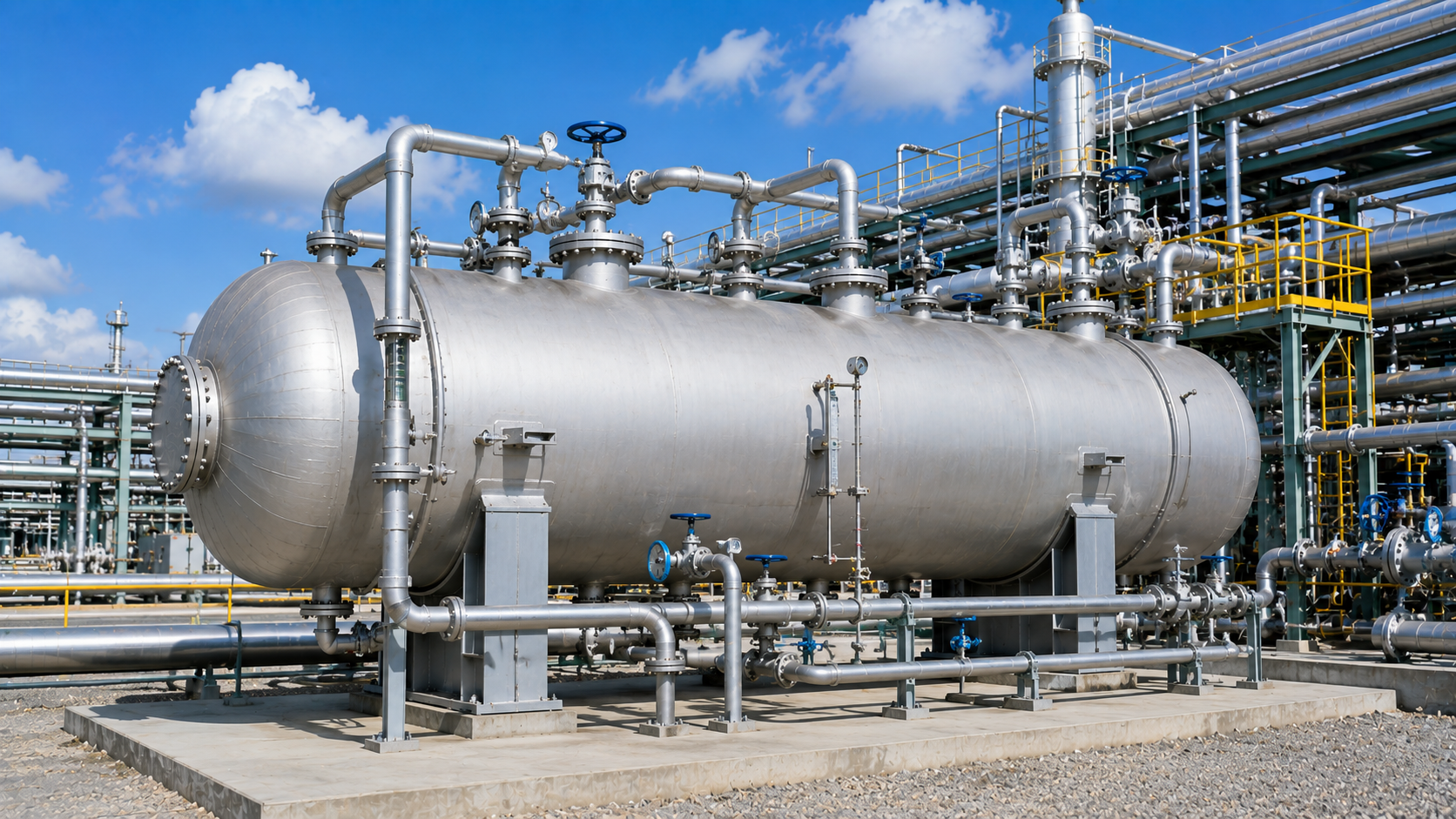 Pressure vessels, abbreviated as \(PV\), is a closed container specifically designed to hold gases or liquids at a pressure substantially different from the surrounding ambient pressure. Pressure vessels are used throughout industrial, commercial, and utility systems to contain fluids safely while they are stored, processed, heated, cooled, separated, or transported within a system. Examples include air receivers, boilers, heat exchanger shells, reactors, storage tanks operating under pressure, and compressed gas cylinders. Stored pressure represents a source of energy, pressure vessels must be engineered to withstand internal pressure, external pressure, temperature effects, and other operating loads without failure.
The design, fabrication, inspection, and testing of pressure vessels are governed by established engineering codes and standards, most notably the American Society of Mechanical Engineers Boiler and Pressure Vessel Code (ASME BPVC). These requirements help ensure that the vessel possesses adequate strength, structural integrity, and safety throughout its intended service life. Materials, wall thickness, weld quality, corrosion allowances, and pressure relief protection are carefully selected and evaluated to prevent leakage, rupture, or catastrophic failure during operation.
| Science |
| Applied Science |
| Engineering |
| Mechanical Engineering |
| Manufacturing |
A pressure vessel is not merely defined by its shape or size, but by its function of safely containing a fluid under pressure and by its compliance with recognized design and safety requirements. Its primary purpose is to provide a secure boundary between a pressurized fluid and the external environment while maintaining reliable operation under specified service conditions
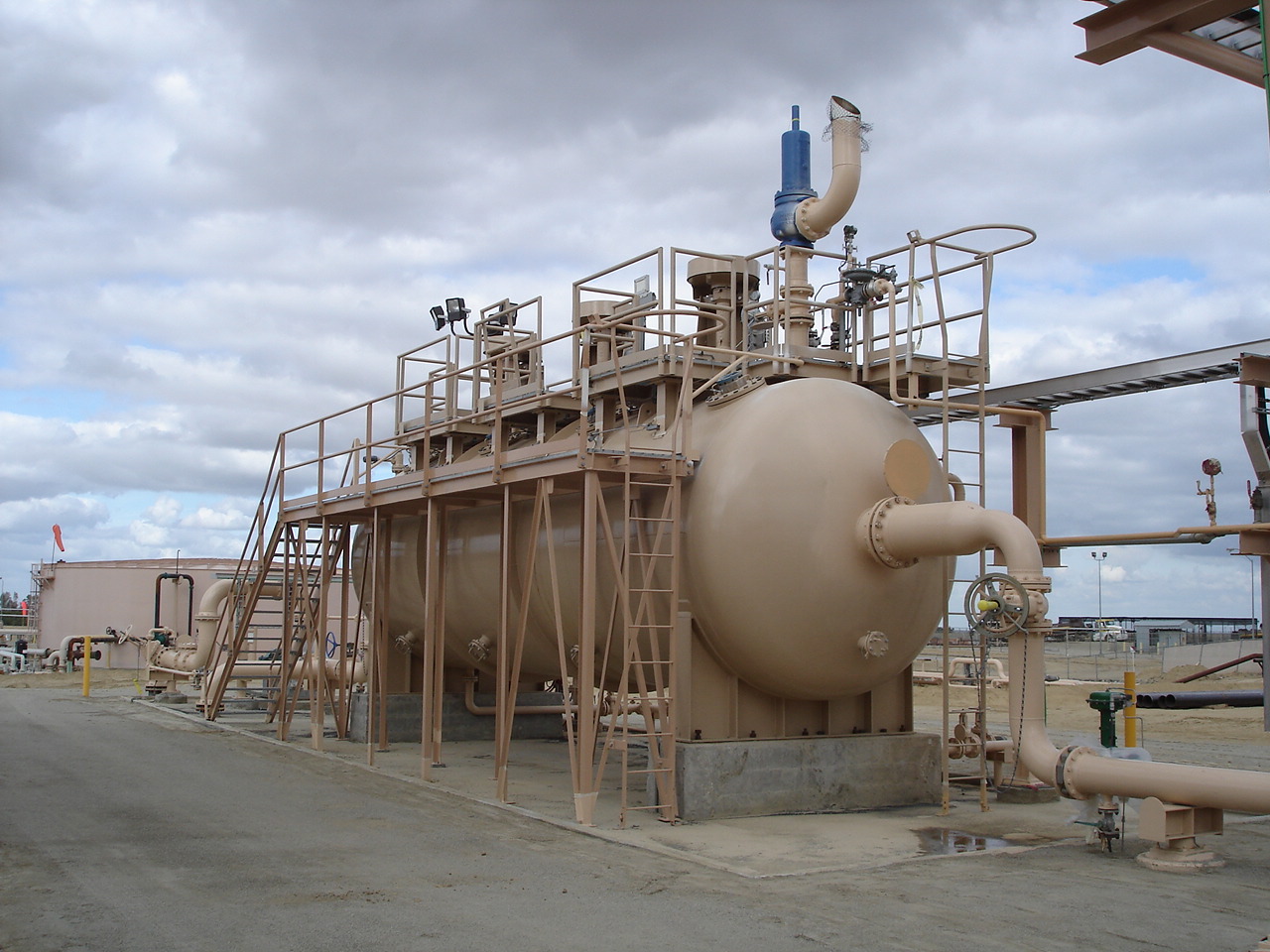 Wemco Induced Static Floatation (ISF) Vessel
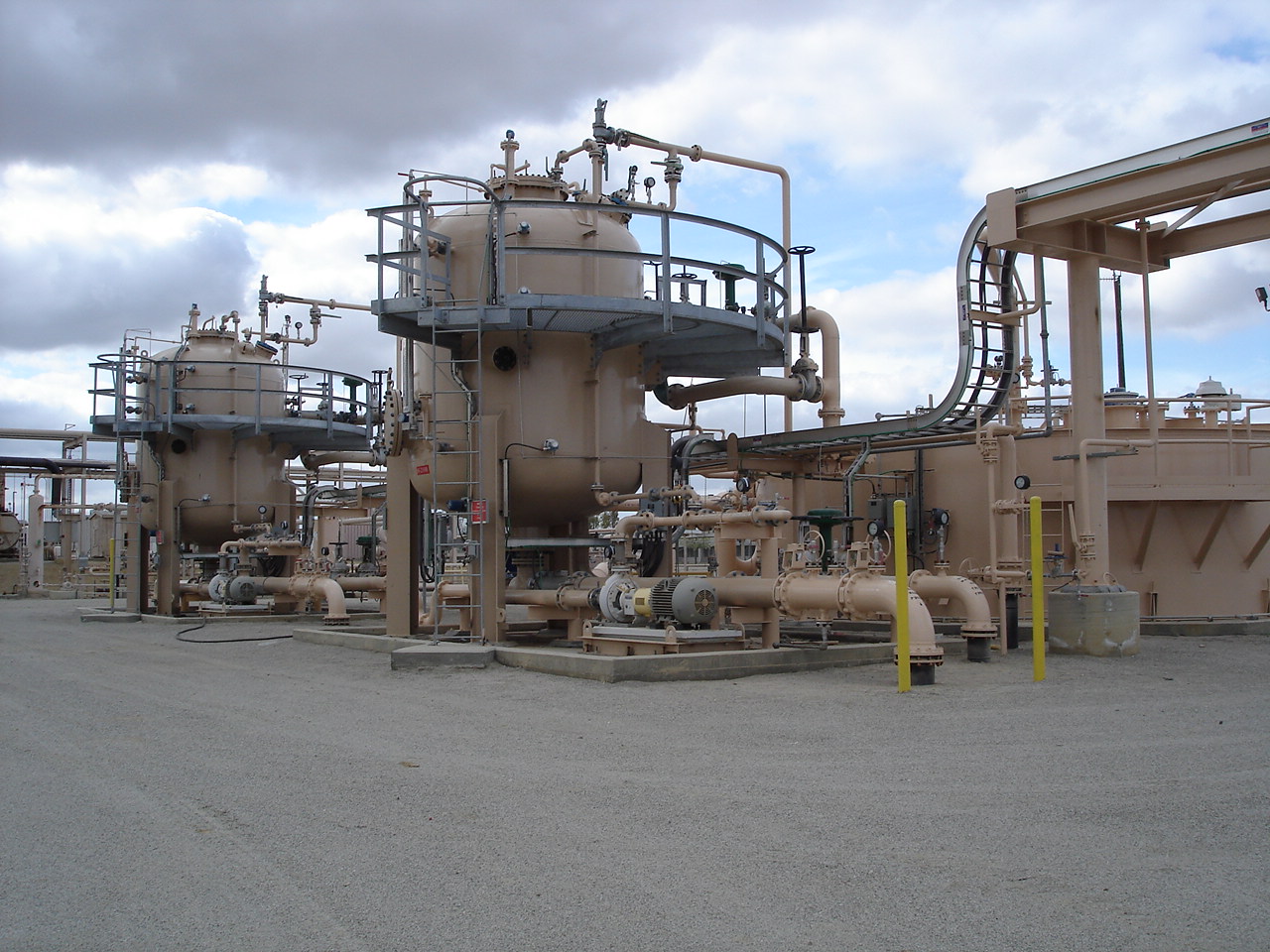 Filter Vessel