
Human Geography
Social Science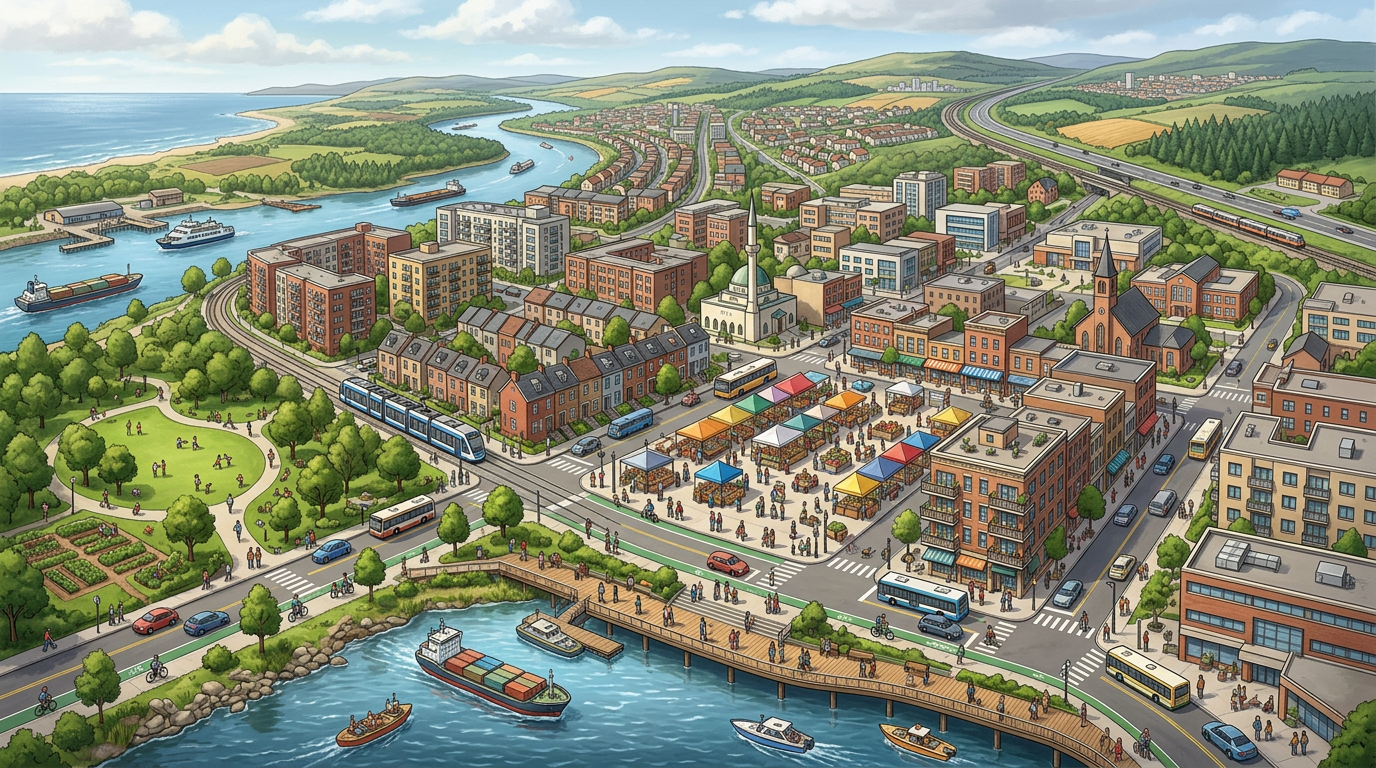 Human geography examines the relationships between human communities and their environments across space and time. It focuses on how people interact with the Earth's surface, how they organize their activities and cultures within specific landscapes, and how these processes vary from one location to another. Unlike physical geography, which focuses on natural processes like weather and geology, human geography centers on the human-built world and the spatial distribution of social phenomena. This includes the study of demographics, urban development, economic networks, and political boundaries, as well as the intangible aspects of human life such as language, religion, and identity.
This discipline seeks to explain why certain social, economic, or cultural activities occur where they do and how those patterns influence the world at large. For example, a human geographer might analyze how the layout of a city affects social equity, or how global trade routes shape the development of coastal regions. By investigating the concept of place, the field looks at the symbolic and emotional meanings humans attach to specific locations, transforming mere physical coordinates into meaningful social environments. The discipline utilizes a variety of methods to map these interactions, providing essential insights into global challenges such as migration, resource management, and urbanization.
| Science |
| Social Science |
| Human Geography |
Human Geography Branches