
Concrete is a composite construction material consisting of a hydraulic cement binder, water, fine aggregate, and coarse aggregate. The most common binder used in modern practice is Portland cement. When water is added to cement, a series of chemical reactions known as hydration occurs. These reactions form calcium silicate hydrate and other hydration products that bind the aggregates together, resulting in a hardened, stone-like material. The aggregates, typically sand (fine aggregate) and gravel or crushed stone (coarse aggregate), provide dimensional stability, reduce shrinkage, and contribute significantly to strength and durability.
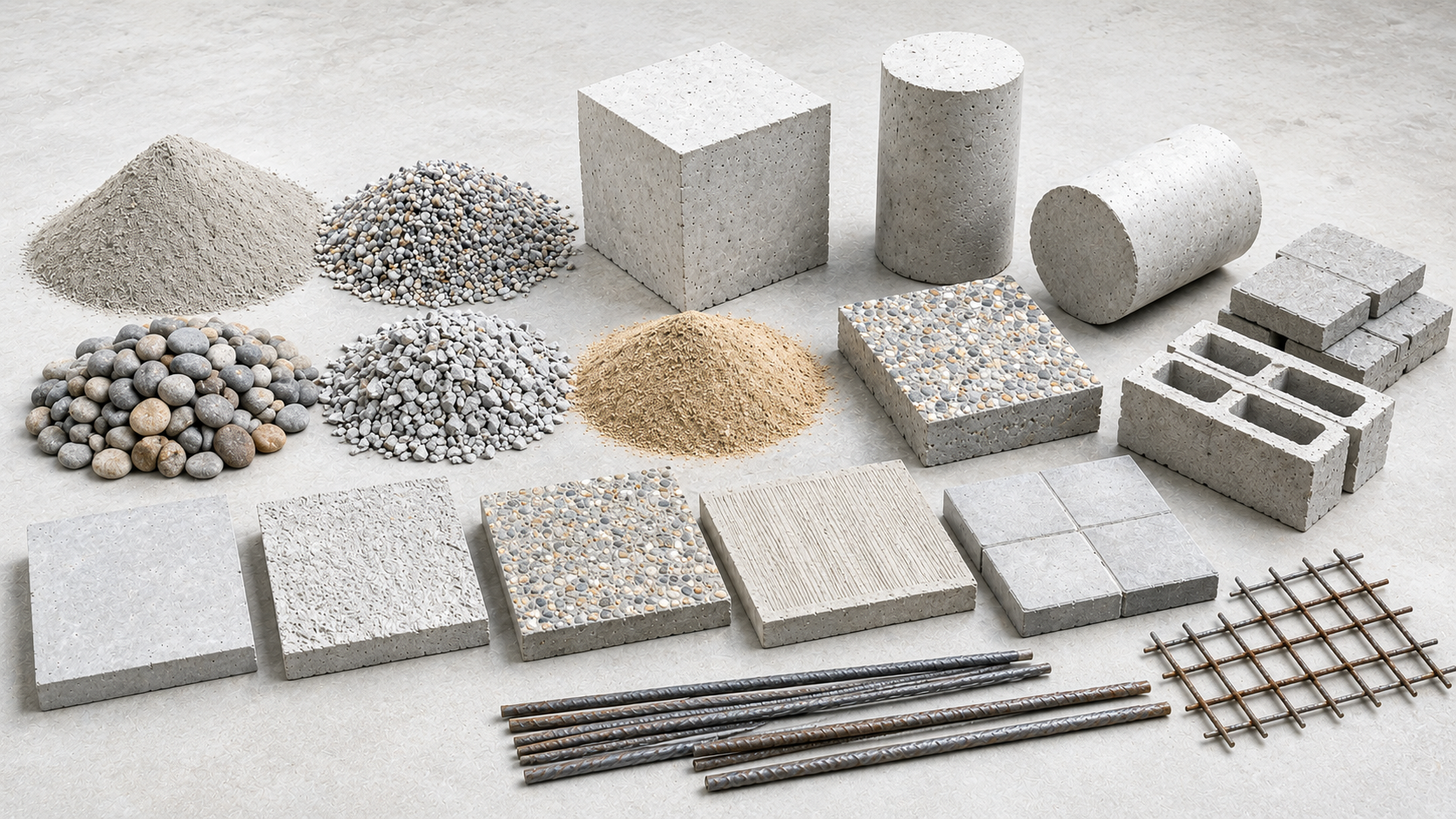 Concrete is characterized by its high compressive strength and relatively low tensile strength. Because of this material behavior, structural applications commonly incorporate steel reinforcement to resist tensile stresses; this composite system is known as reinforced concrete. The mechanical and durability properties of concrete depend on multiple controllable parameters, including water-to-cement ratio, aggregate grading, cement type, curing conditions, and admixtures. The water-to-cement ratio is particularly critical, lower ratios, when properly consolidated and cured, generally produce higher strength and lower permeability due to reduced capillary porosity.
Fresh concrete must be placed, consolidated, and finished before it loses workability. Workability is influenced by water content, aggregate characteristics, temperature, and the use of chemical admixtures. After placement, proper curing is required to maintain adequate moisture and temperature conditions to allow hydration to proceed. Inadequate curing reduces strength development and durability.
Concrete is used extensively in foundations, pavements, buildings, bridges, dams, and other infrastructure because it can be cast into a wide range of shapes, exhibits long service life when properly designed and maintained, and can be produced from widely available raw materials. These characteristics are well-established in structural and materials engineering practice.
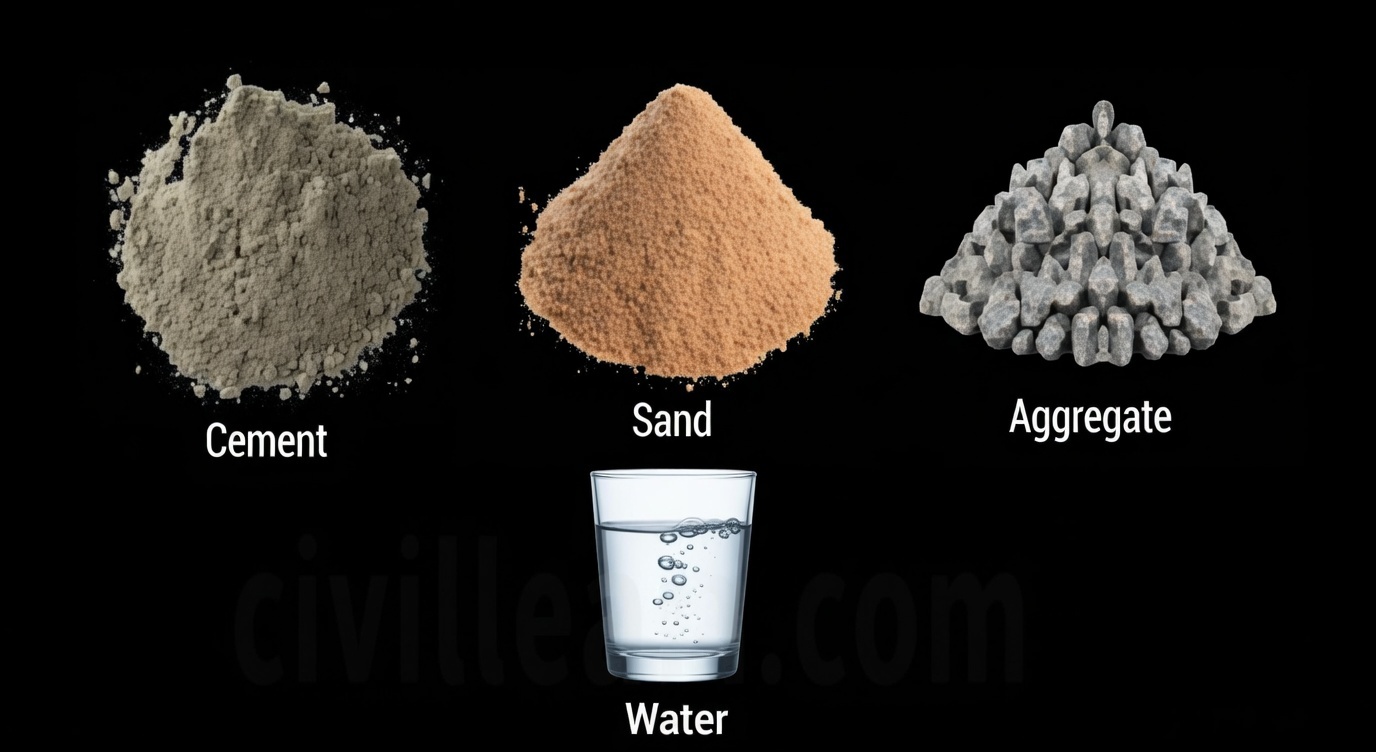 Materials of Conventional Concrete