
Astronomy
Natural Science, Astronomy, Solar System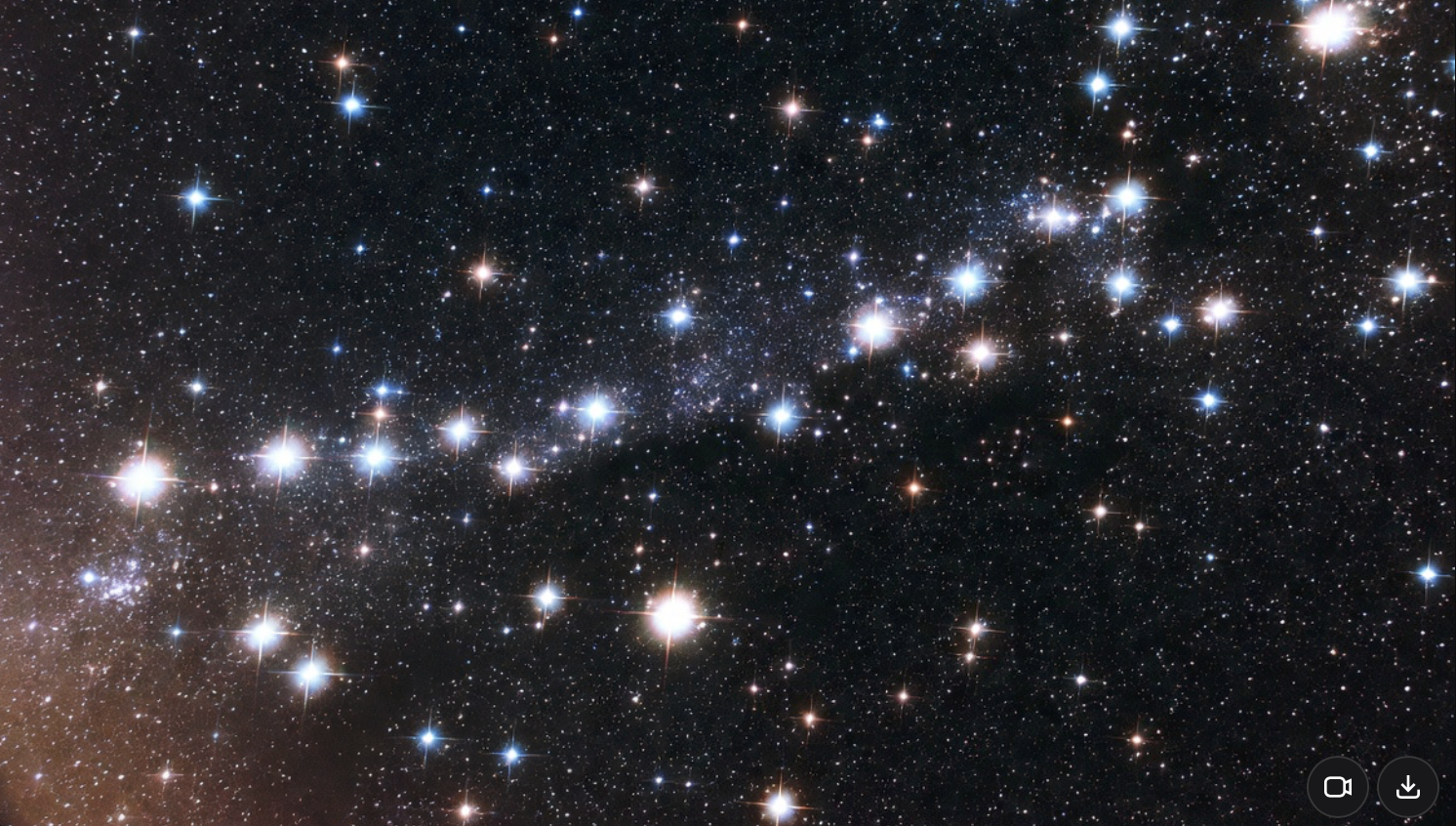 Astronomy is the study of celestial objects, space, and the physical universe as a whole. It focuses on observing and explaining beyond Earth’s atmosphere, including stars, planets, moons, galaxies, comets, and the large-scale structure of the universe. Astronomy relies on well-established principles from physics and mathematics to interpret observational data and to develop models that describe how celestial systems form, evolve, and interact over time.
The field encompasses both observational and theoretical approaches. Observational astronomy involves the collection of data using telescopes and detectors across different regions of the electromagnetic spectrum, from radio waves to gamma rays. Theoretical astronomy uses this data to construct and test models governed by physical laws such as gravity and nuclear fusion, which explain, for example, the motion of planets and the energy production in stars. Modern astronomy also includes the study of cosmology, which examines the origin, structure, and evolution of the universe, and astrophysics, which applies physical theory to astronomical phenomena.
| Science |
| Natural Science |
| Astronomy |
Astronomy investigates matter in outer space with particular attention to the positions, dimensions, distribution, motion, composition, energy, and evolution of celestial bodies and phenomena. Whether studying nearby solar system bodies like the Moon or probing the cosmic microwave background radiation from the universe's earliest epochs, astronomy remains grounded in verifiable data collected through observation and analysis, continually expanding our understanding of the universe as a whole without venturing into untestable speculation.
Astronomy Branches