Atterberg limits, also called Atterberg consistency limits or Atterberg soil limits, are a set of three specific moisture content thresholds that define the physical properties of fine grained soils such as clay and silt. These limits are used in geotechnical engineering and soil science to classify and evaluate the behavior of soils, especially with regard to their plasticity and liquidity characteristics.
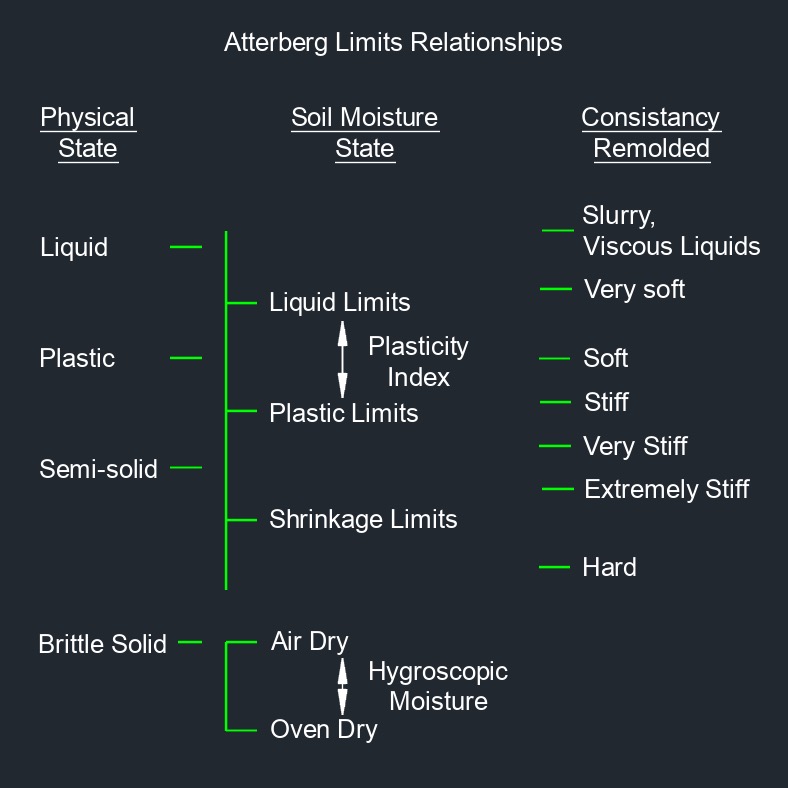 Atterberg Limit Types
These Atterberg limits are essential for characterizing the engineering properties of soils. They help in soil classification, determining the suitability of soils for construction purposes, and predicting how soils will behave under different moisture conditions. For example, a soil with a high plasticity index (the difference between the liquid limit and plastic limit) is more prone to volume changes with variations in moisture content, making it challenging to work with in construction projects without proper treatment or stabilization.