Aeronautical
Mechanical, Aeronautical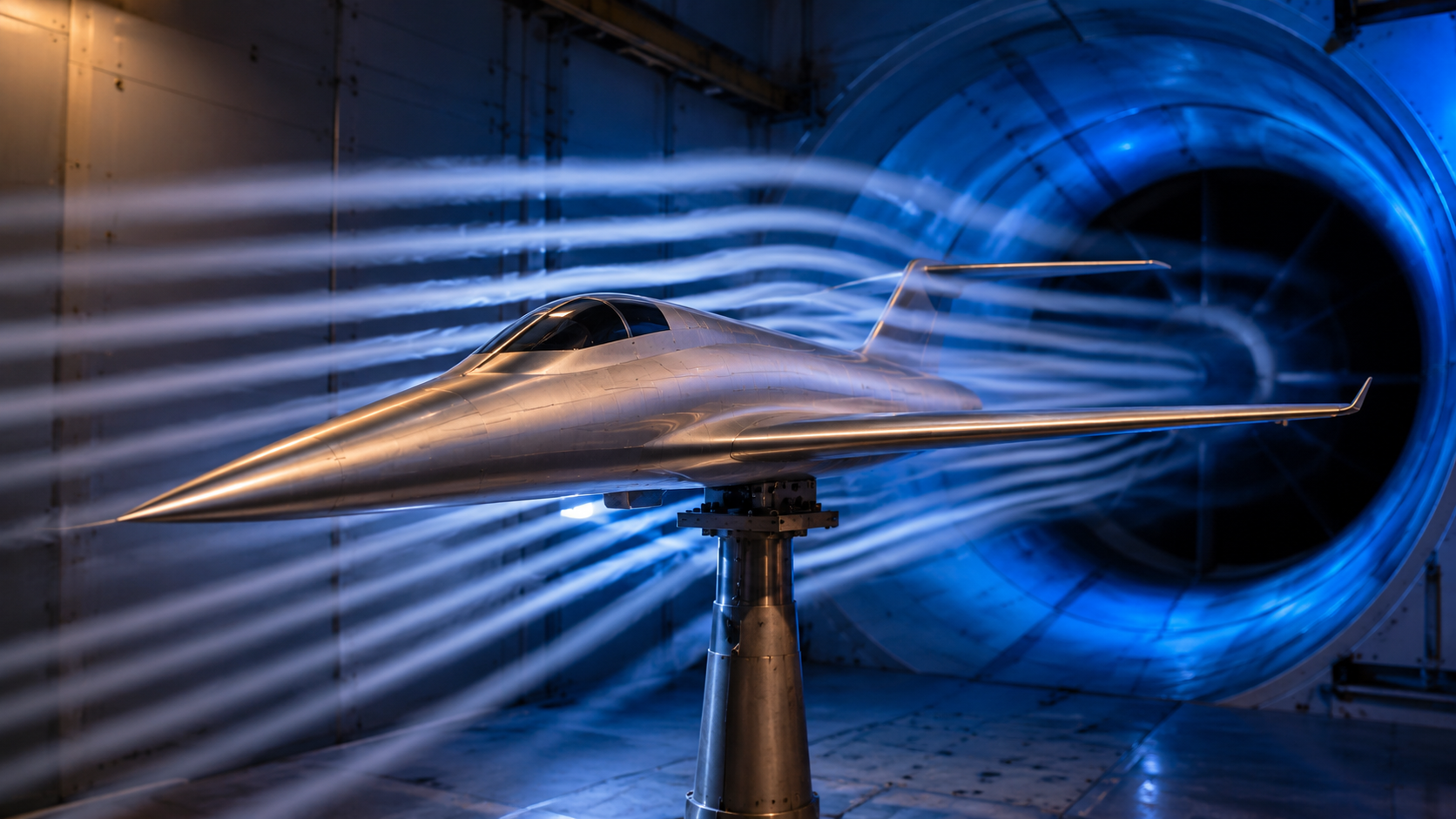 Aeronautical pertains to the engineering, designing, constructing, and operating aircraft that travel within Earth’s atmosphere. Its meaning is not merely related to aircraft, rather, a well-defined body of scientific and engineering knowledge concerned with the behavior, design, and operation of heavier-than-air vehicles moving through a fluid medium, Earth’s atmosphere. It is directly associated with the field of Aeronautics, which focuses on vehicles such as airplanes, helicopters, and other atmospheric flight systems, a distinct from spacecraft that operate beyond the atmosphere.
Aeronautical encompasses the application of physical laws governing fluid flow, forces, and energy exchange. Central to this is the interaction between solid bodies (aircraft) and a compressible fluid (air), described through principles such as thermodynamics. Aeronautical considerations therefore include lift generation through pressure differentials, drag as a resistive force arising from viscous and pressure effects, and thrust produced by propulsion systems.
| Science |
| Applied Science |
| Engineering |
| Mechanical Engineering |
| Aeronautical |
The distinction between aeronautical and aerospace is also exact and non-interchangeable. Aeronautical applies exclusively to vehicles operating within Earth's atmosphere, where aerodynamic forces dominate. Aerospace includes both aeronautical and astronautical, the latter dealing with flight in vacuum environments where orbital mechanics and gravitational dynamics supersede aerodynamic considerations. Aeronautical is a field centered on atmospheric flight, grounded in experimentally verified physics and standardized engineering methodologies.
Aeronautical Branches
Aerodynamics - The study of the behavior of air in motion and its interaction with solid bodies such as aircraft, including lift, drag, flow separation, and compressibility effects.
Aeroelasticity - The study of the interaction between aerodynamic forces and structural elasticity, including phenomena such as flutter, divergence, and control reversal.
Aircraft Structures - The analysis and design of an aircraft’s physical framework (fuselage, wings, control surfaces), focusing on strength, fatigue, elasticity, and structural integrity under aerodynamic and inertial loads.
Aircraft Design - A multidisciplinary branch that integrates aerodynamics, structures, propulsion, and systems engineering to develop complete aircraft configurations meeting specified performance and safety requirements.
Avionics - The integration and application of electronic systems used in aircraft, including navigation, communication, flight control systems, and instrumentation.
Flight Mechanics (Stability and Control) - The study of aircraft motion and response to forces and moments, including static and dynamic stability, control system behavior, and handling characteristics.
Flight Testing and Performance Analysis - The empirical evaluation of aircraft behavior in real flight conditions to validate theoretical models, assess performance metrics, and ensure compliance with regulatory standards such as those set by the Federal Aviation Administration.
Propulsion - The study and development of systems that generate thrust for atmospheric flight, including air-breathing engines such as turbojets, turbofans, turboprops, and piston-propeller systems.