
Electrical Engineering
Mechanical, Electrical, Laws of Electromagnetism, Instrumentation and Controls, Laws of Electricity, Laws of Network, Power System, Telecommunication, Electric Theorems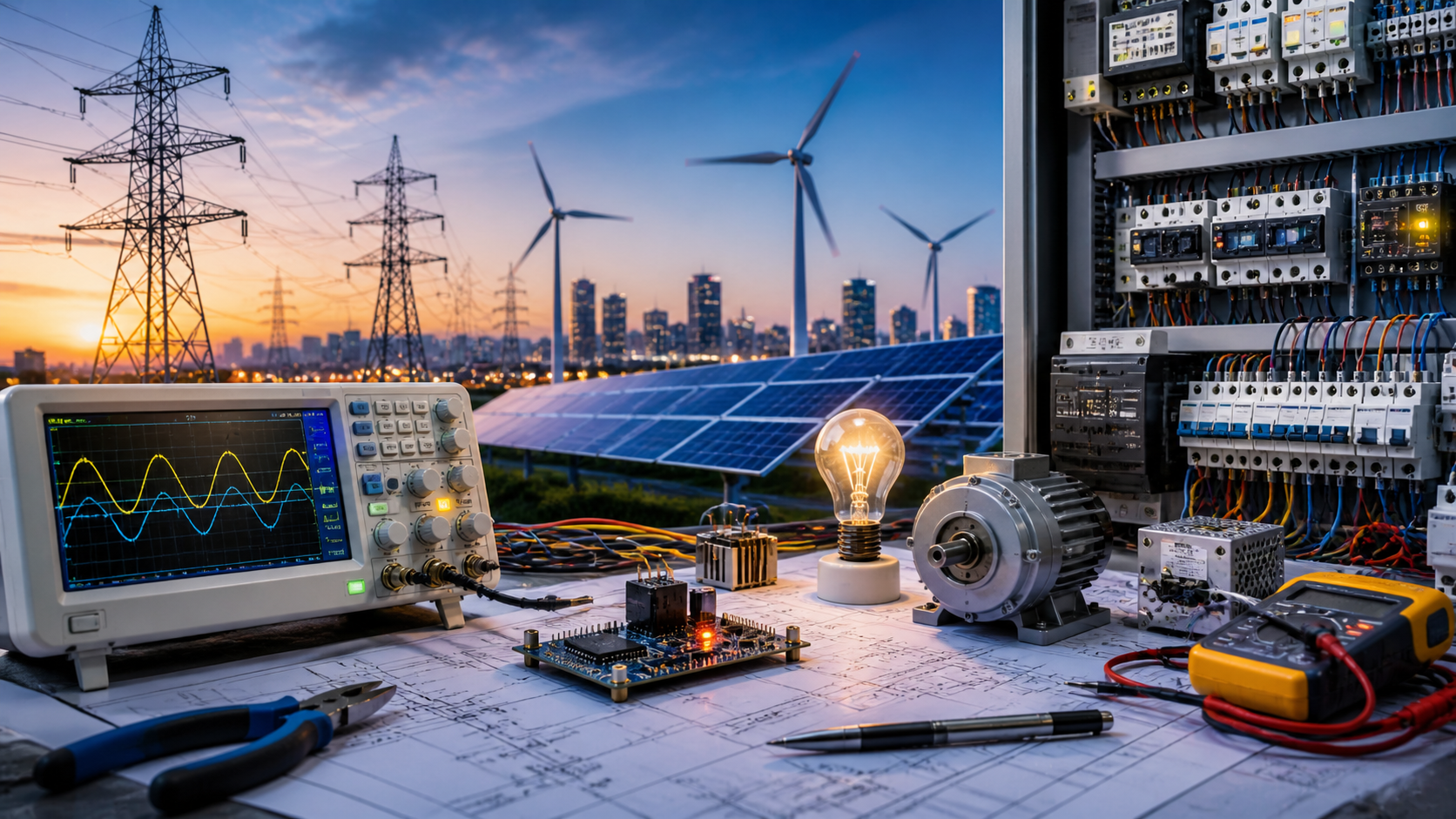 Electrical engineers, abbreviated as EE, design, develop, test, and supervise the manufacturing of electrical equipment. Electrical & Electronic engineers design things such as power systems, electronics / microelectronics, signal processing, instrumentation & control systems, computers, and computer networks.
Electrical engineering is a branch of engineering that deals with the study, design, development, and implementation of electrical and electronic systems, including power generation and transmission, communication systems, control systems, and electronic circuits. Electrical engineers work in a variety of industries, including power generation and distribution, telecommunications, electronics, and manufacturing. They may work in research and development, product design, systems analysis, or project management, depending on their area of specialization.
Computer – A branch of engineering that integrates principles of electrical engineering and computer science to design, develop, and test computer hardware, embedded systems, and related computing technologies.
Control Systems – A field of engineering focused on modeling, analyzing, and designing systems that regulate the behavior of dynamic processes using feedback and control theory.
Electromechanical – An engineering discipline concerned with systems that combine electrical and mechanical components, such as motors, actuators, and automated machinery.
Electronics – A branch of electrical engineering that deals with the design and application of electronic circuits, devices, and systems that process electrical signals.
Instrumentation and Controls – A field that focuses on the design, implementation, and maintenance of instruments and control systems used to measure and regulate variables such as temperature, pressure, flow, and level in industrial processes.
Microelectronics – A specialized area of electronics engineering concerned with the design and fabrication of very small electronic circuits and semiconductor devices, typically integrated circuits.
Network – A discipline focused on the design, implementation, management, and maintenance of computer networks that enable communication and data exchange between devices.
Power Systems – A branch of electrical engineering that deals with the generation, transmission, distribution, and utilization of electric power.
Signal Processing – A field concerned with the analysis, modification, and synthesis of signals (such as audio, images, and sensor data) using mathematical and computational techniques.
Telecommunications – A branch of engineering that focuses on the transmission of information over distance through electronic systems such as radio, optical, and wired communication networks.
Electric Wire Materials
Copper Electrical Wire - Copper (Cu) is considered the standard in wiring. Most homes and appliances use copper for two reasons. It is easy to mold or bend and it is a good conductor. Copper is rather easy to come by but not as easy as other conductor metals.
Aluminum Electrical Wire - Aluminum (Al) is also easy to mold and bend but less of a conductor than copper. If you decide to use aluminum wire that will carry the same aount of electricity as a copper wire, the wire needs to have a larger diameter. Since aluminum is more abundant than copper, it makes it the cheaper of the two.
Silver Electrical Wire - Silver (Ag) is the best conductor of electricity for high temperatures. However, it is hard to bend and expensive.
Alloys in Electrical Wire - In manufacturing, an alloy may sometimes be used. Aluminum and copper can be used for cost and conductibility.